






















Klondike Solitaire – Classic Single-Player Card Game
Play Klondike Solitaire online, the classic single-player card game. Arrange cards by alternating colors, uncover hidden cards, and build all four foundations from Ace to King.
Game Introduction
Klondike Solitaire is a classic single-player card game that has entertained players for generations. Often known simply as Solitaire or Patience, it is one of the most widely recognized versions of the solitaire card game family. Its simple rules make it easy to learn, but arranging the cards in the correct order requires patience, careful planning, and a little luck.
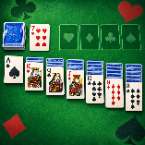
The game starts with a standard 52-card deck arranged into seven columns, with some cards hidden and others face-up. Your goal is to sort all the cards into four foundation piles, one for each suit, starting with an Ace and finishing with a King. To do this, you need to move cards between columns, uncover hidden cards, and make smart use of the stock pile.
What makes Klondike Solitaire enjoyable is the balance between strategy and chance. Every move can affect the options available later in the game, so it is worth thinking ahead before moving a card. Sometimes a seemingly useful move can block another sequence, while uncovering a hidden card may open up several new possibilities.
Whether you have played Solitaire for years or are trying it for the first time, Klondike offers a familiar card-playing experience that is easy to pick up and challenging to master.
How to Play Klondike Solitaire
Klondike Solitaire uses a standard deck of 52 playing cards without jokers. At the beginning of the game, the cards are divided between the tableau and the stock pile.
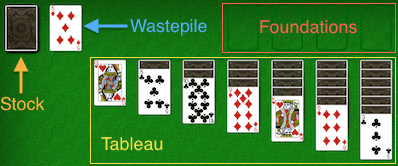
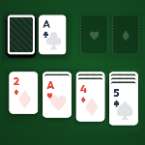
The tableau contains seven columns arranged from left to right. The first column has one card, the second has two, and each following column contains one additional card. This means the seventh column has seven cards. Only the top card of each column is face-up, while all the cards underneath remain hidden. The remaining 24 cards form the face-down stock pile.
The main objective is to move all 52 cards into four foundation piles, separated by suit. Each foundation starts with an Ace and must be built upward in numerical order, ending with a King.
Moving Cards Between Columns
Cards in the tableau must be arranged in descending order while alternating between red and black suits. For example, you can place a black 9 on a red 10, or a red 6 on a black 7.
You can move a single card or an entire correctly arranged sequence from one tableau column to another, provided the destination card follows the descending order and alternating-color rule. Moving cards strategically can help uncover face-down cards and create more opportunities for future moves.
Uncovering Hidden Cards
Whenever you move the face-up card covering a hidden card, the newly exposed card is turned face-up. Revealing these cards is an important part of the game because it gives you more options and helps you build longer sequences.
Try to uncover hidden cards whenever possible, especially in columns containing several face-down cards.
Using the Stock and Waste Piles
When you cannot make a useful move with the cards already on the tableau, you can draw a card from the stock pile. Drawn cards are placed face-up in the waste pile, where the top card becomes available for play.
You can move the top waste card to a tableau column if it follows the alternating-color and descending-order rules. It can also be moved directly to a foundation pile if it is the next card required for that suit.
Once the stock pile is empty, you can recycle the waste pile to create a new stock pile, depending on the game's rules. This gives you another opportunity to access cards that were previously unavailable.
Building the Foundation Piles
There are four foundation piles, one for each suit: hearts, diamonds, clubs, and spades. Each pile must begin with an Ace and continue in ascending order.
The correct sequence is:
Ace, 2, 3, 4, 5, 6, 7, 8, 9, 10, Jack, Queen, and King.
You win the game when all four foundation piles are complete and every card has been placed in its correct suit.
Filling Empty Tableau Spaces
If you move all the cards out of a tableau column, an empty space becomes available. In standard Klondike rules, only a King can be placed in an empty column. You can also move a sequence beginning with a King into that space.
Creating empty columns can be especially useful because it gives you more flexibility when rearranging cards and uncovering hidden sequences.
Game Controls
Klondike Solitaire uses simple mouse or touch controls, making it easy to play on both desktop and mobile devices.
- Select a Card: Click or tap a face-up card to select it.
- Move a Card: Drag and drop a card onto another column or foundation pile where it can legally be placed.
- Move Card Sequences: Select or drag a valid group of cards together to move the sequence to another tableau column.
- Draw from the Stock: Click or tap the stock pile to reveal the next available card.
- Recycle the Stock: When the stock pile is empty, click or tap it to turn the waste cards back into the stock pile, if supported by the game.
- Automatic Moves: Some versions allow you to double-click or tap a card to move it automatically to a suitable foundation pile.
Tips for Playing Klondike Solitaire
Although Klondike Solitaire involves some luck, a few thoughtful decisions can improve your chances of winning.
- Prioritize hidden cards: Try to uncover face-down cards early, as they may reveal useful cards needed to continue building sequences.
- Use empty columns wisely: Avoid filling an empty tableau space unless you have a good reason. Keeping it available for a King can give you more flexibility.
- Think before moving cards to foundations: Moving a card to a foundation is usually helpful, but occasionally keeping a card in the tableau can make it easier to arrange other sequences.
- Pay attention to card colors: Remember that tableau sequences must alternate between red and black. Planning around color combinations can prevent unnecessary moves.
- Make good use of the stock pile: Don't rely on drawing cards alone. Check the tableau for possible moves before using the stock.
- Look ahead: Before moving a card, consider whether the move will uncover another card or block a useful sequence.
When Does the Game End?
A game of Klondike Solitaire is won when all 52 cards have been successfully arranged into the four foundation piles, with each suit running from Ace through King.
However, not every deal can be completed. If there are no legal moves left and no useful cards available from the stock or waste pile, the game may reach a standstill. In that situation, the round is considered lost unless the game offers an undo or restart option.
Each new deal brings a different arrangement, so even after an unsuccessful round, you can start again and try a new approach.