



























Dr. Mario (1990) | Game Boy Advance Video Game
Play Dr. Mario (1990), Nintendo classic puzzle game where you eliminate colorful viruses using falling capsules. Learn the gameplay, controls, and what makes this retro puzzle title a lasting favorite.
Game Intro
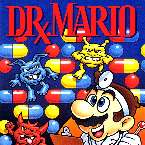
Dr. Mario is one of Nintendo's earliest puzzle games and remains surprisingly addictive decades after its original release. Instead of jumping through platforming levels, Mario trades his plumber outfit for a lab coat and takes on the role of a doctor tasked with clearing dangerous viruses from a giant medicine bottle.
Originally released in 1990, the game combines simple mechanics with increasingly challenging puzzles. While it shares some similarities with classic falling-block games, Dr. Mario creates its own identity through color matching, chain reactions, and strategic placement of capsules. Its easy-to-understand rules make it approachable for newcomers, but mastering higher levels requires careful planning and quick decision-making.
The gameplay is supported by memorable music, colorful visuals, and a difficulty curve that keeps each stage engaging. Even today, Dr. Mario stands out as one of Nintendo's most recognizable puzzle experiences.
How to Play
The goal in Dr. Mario is to eliminate every virus inside the medicine bottle before the play area fills up. Viruses appear in three different colors: red, yellow, and blue. To remove them, you'll use capsules that Dr. Mario tosses into the bottle from above.
Each capsule consists of two colored halves. As the capsule falls, you can move it around and rotate it to place it where you need it. When four matching colors connect vertically or horizontally, they disappear from the screen. This applies to both capsule pieces and viruses.
As viruses are cleared, unsupported capsule pieces may fall into new positions, sometimes creating chain reactions that remove additional groups automatically. Successfully using these combos becomes increasingly important as levels become more crowded and difficult.
A stage is completed once all viruses have been removed. The challenge comes from managing limited space and preventing capsules from stacking too high. If the bottle becomes clogged and there is no room for new capsules to enter, the game ends.
As you progress through higher levels, the number and placement of viruses become more demanding, requiring better planning and faster reactions. The game's simple concept quickly develops into a satisfying puzzle experience that rewards smart positioning and efficient clears.
Controls
D-Pad or Arrow Keys
- Left / Right – Move the falling capsule horizontally.
- Down – Increase the capsule's falling speed.
Buttons
- A Button or Z Key – Rotate the capsule clockwise.
- B Button or X Key – Rotate the capsule counterclockwise.
Start
- Pause or resume gameplay.
Touch Devices Controls
You can use onscreen trontrols in touch devices like android mobile, applie phone, iPhone, tablet, iPad and other touch support devices
Why Dr. Mario Still Holds Up
What makes Dr. Mario enjoyable years after its release is its balance between simplicity and strategy. The rules can be learned within minutes, yet every stage presents new situations that require careful thinking. Creating chain reactions, clearing difficult virus placements, and surviving crowded bottles gives the game a satisfying puzzle-solving rhythm that remains entertaining long after the first few levels.
Whether you're revisiting a Nintendo classic or discovering it for the first time, Dr. Mario offers a timeless puzzle challenge that's easy to pick up and hard to put down.