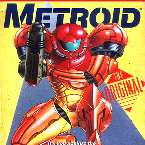






















Metroid (1986) | Nintendo Original Game Boy Advance Video Game
Explore the original Metroid (1986), Nintendo classic action-adventure game that introduced Samus Aran. Journey across planet Zebes, discover powerful upgrades, defeat Kraid and Ridley, and confront Mother Brain in this genre-defining adventure.
Game Intro
Metroid is one of Nintendo's most influential action-adventure games and the title that introduced players to legendary bounty hunter Samus Aran. Originally released in 1986, the game takes place on the hostile alien world of Zebes, where a dangerous lifeform known as the Metroid has fallen into the hands of the Space Pirates.
The mission begins with Samus infiltrating the planet's underground labyrinth to stop the pirates from turning the Metroids into biological weapons. What starts as a straightforward rescue operation quickly becomes a journey through interconnected caves, hidden passages, and heavily guarded enemy strongholds. Unlike many games of its era, Metroid encouraged exploration and rewarded curiosity, creating a sense of discovery that remains a major part of its appeal today.
The atmosphere is often lonely and mysterious, with vast areas to uncover and very little guidance. As players venture deeper into Zebes, they gradually become stronger, unlocking new abilities that reveal previously inaccessible locations and secrets scattered throughout the planet.
How to Play
Players control Samus Aran as she explores the sprawling world of Zebes from a side-scrolling perspective. At the start of the adventure, Samus is equipped with only a basic weapon and limited mobility, making early encounters challenging.
Progression revolves around exploration. New upgrades are hidden throughout the planet, and finding them is essential for reaching new areas. As Samus gains stronger equipment, previously blocked routes become accessible, encouraging players to revisit older locations in search of secrets and alternate paths.
Some of the most important upgrades include the Morph Ball, which allows Samus to roll through narrow tunnels, and Bombs that can reveal hidden passages concealed within walls and floors. Other upgrades improve mobility, defense, and offensive power, making exploration safer and combat more manageable.
Throughout the journey, players battle a variety of alien creatures and Space Pirate forces. Defeated enemies often drop health and ammunition pickups, helping Samus survive the increasingly dangerous environments. Energy Tanks can also be discovered to increase maximum health, providing a valuable advantage during tougher encounters.
The adventure eventually leads to confrontations with Zebes' powerful guardians, Kraid and Ridley. Defeating both bosses is necessary to unlock the path to the game's final area, where Samus faces the mastermind behind the Space Pirate threat: Mother Brain.
Controls
Movement
- Use the directional controls to move Samus left and right (Arrow Keys).
- Press Up or Down when required to interact with doors, elevators, and certain passages.
Jump
- Press the Jump button (Z Key) to leap across platforms and avoid hazards.
- Timing jumps is important when navigating Zebes' vertical areas.
Fire Weapon
- Press the Attack button (X Key) to shoot Samus' arm cannon.
- Different upgrades enhance the effectiveness of her weaponry as the game progresses.
Morph Ball
- Activate Morph Ball to transform into a compact sphere.
- Roll through tight spaces and hidden tunnels that cannot be reached in normal form.
Bombs
- While in Morph Ball form, place bombs to damage enemies and uncover secret pathways.
Special Abilities
- Advanced upgrades such as the Screw Attack allow Samus to damage enemies while performing spinning jumps, opening new strategies for both combat and exploration.
Why Metroid Still Stands Out
Even decades after its release, Metroid remains a landmark title in the action-adventure genre. Its focus on exploration, backtracking, hidden upgrades, and player-driven discovery helped establish the foundation for what would later become known as the "Metroidvania" style of game design. While its age shows in some areas, the sense of adventure and freedom it offers continues to make it an important piece of gaming history.